The Comtat Venaissin was created in 1274 by the Papal State
The entire region was an enclave within the Kingdom of France, comprising the area around the city of Avignon roughly between the Rhône, the Durance and Mont Ventoux, and a small exclave located to the north around the town of Valréas bought by Pope John XXII. The Comtat also bordered the Principality of Orange. The region is still known informally as the Comtat Venaissin, although this no longer has any political meaning.
The region was named after its former capital, Venasque which was replaced as capital by Carpentras in 1320.
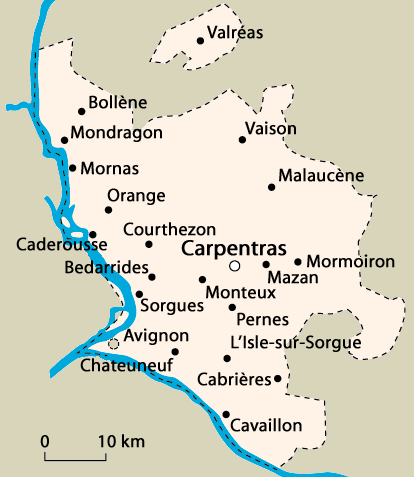
The Comtat Venaissin after 1320
The Sold of Avignon and his Impact on The Comtat Venaissin
Avignon was sold to the papacy by Joanna I, Queen of Naples and Countess of Provence, in 1348, whereupon the two comtats were joined together to form a unified papal enclave geographically, though retaining their separate political identities.
The enclave’s inhabitants did not pay taxes and were not subject to military service, making life in the Comtat considerably more attractive than under the French Crown. It became a haven for French Jews, who received better treatment under papal rule than in the rest of France. The Carpentras synagogue, built in the 14th century, is the oldest in France, and until the French Revolution preserved a distinctive Provençal Jewish tradition.
But with the years the freedom of the Jews was restricted by the pope even in the XVII era the Jews did wears specially clothes when they gone outside and live in their own Neighbourhoods chiefly in Carpentra, Cavaillon and Avignon where the synagogues and the Jews community was.
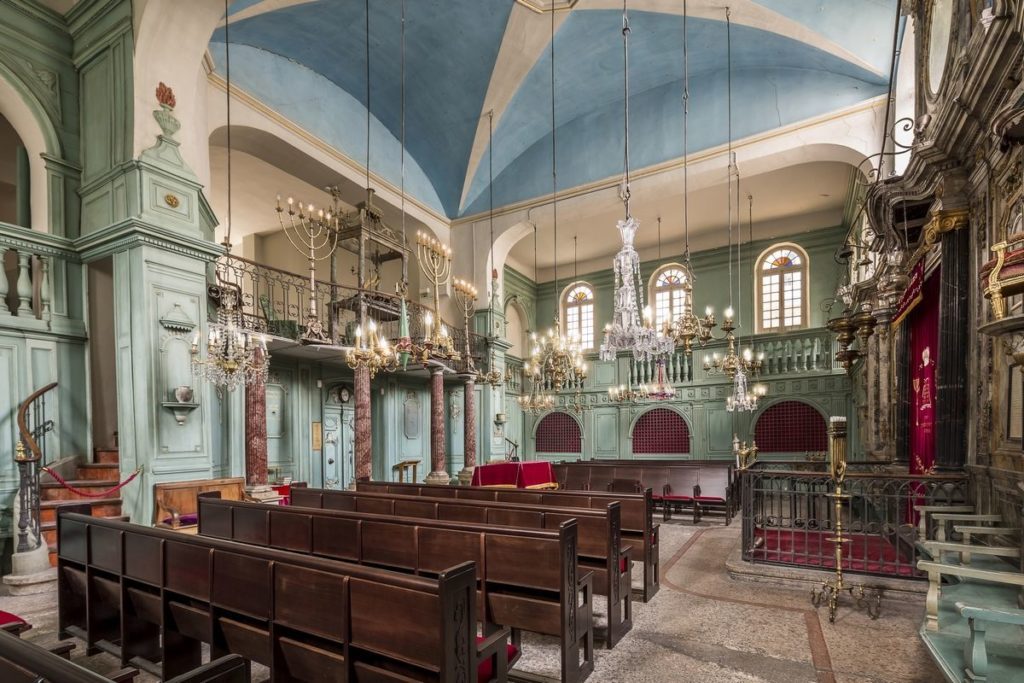
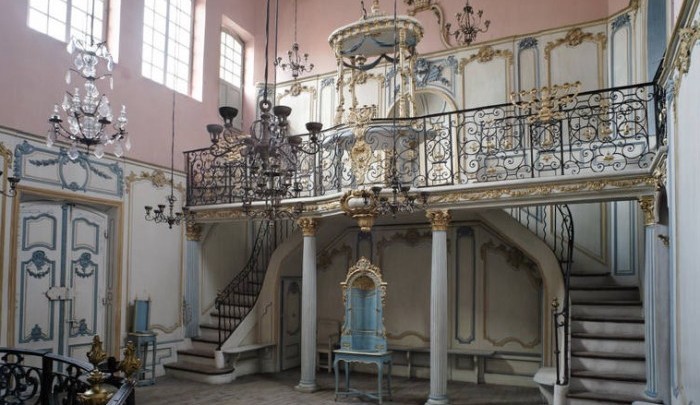
Synagogue of Cavaillon Synagogue of Carpentra
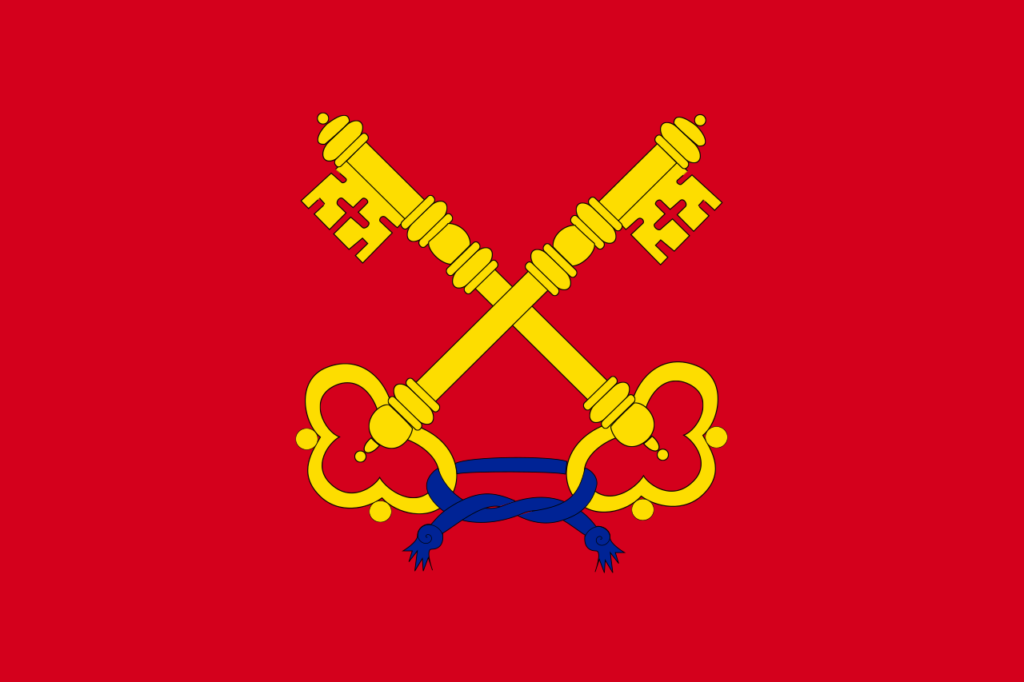
this the flag of the comtat venaissin with 2 keys and bleu string which represent the unicity of the church and the state from papal state
What papal state mean ?
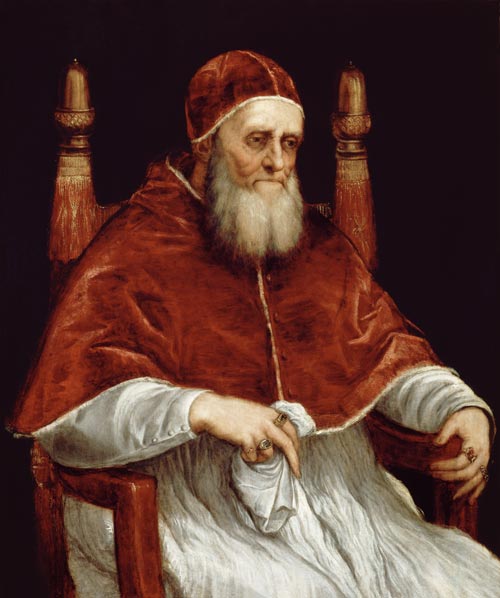
The Papal States, officially the State of the Church, were a series of territories in the Italian Peninsula under the direct sovereign rule of the pope from 756 until 1870,They were among the major states of Italy from the 8th century until the unification of Italy, between 1859 and 1870.
The state had its origins in the rise of Christianity throughout Italy, and with it the rising influence of the Christian Church. By the mid-8th century, with the decline of the Byzantine Empire in Italy, the Papacy became effectively sovereign. Several Christian rulers – including the Frankish kings Charlemagne and Pepin the Short – further donated lands to be governed by the Church. During the Renaissance, the papal territory expanded greatly and the pope became one of Italy’s most important secular rulers as well as the head of the Church. At their zenith, the Papal States covered most of the modern Italian regions of Lazio (which includes Rome), Marche, Umbria and Romagna, and portions of Emilia. These holdings were considered to be a manifestation of the temporal power of the pope, as opposed to his ecclesiastical primacy.
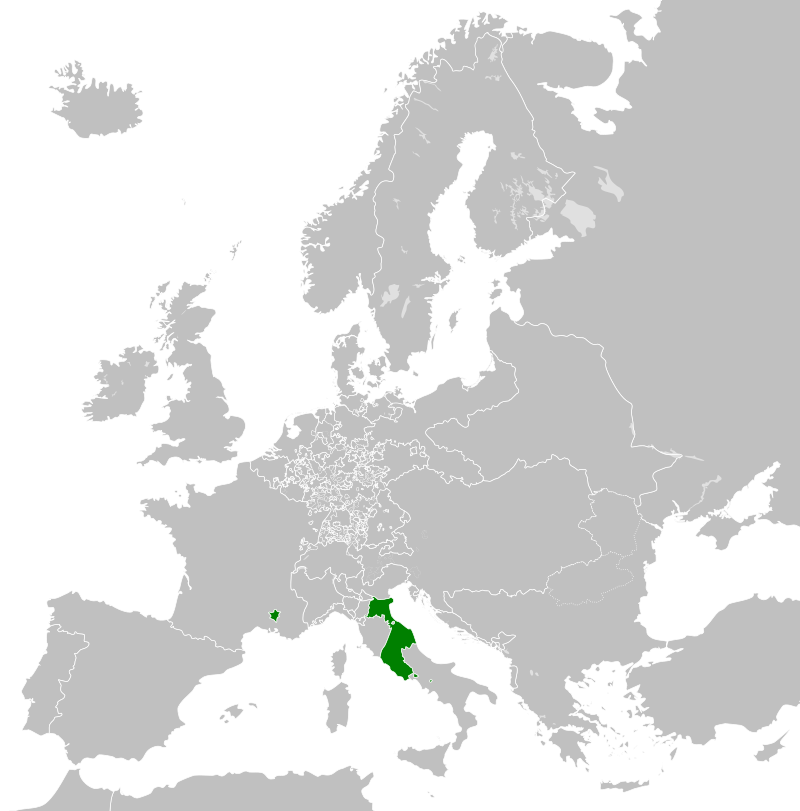
The Power of the Popes
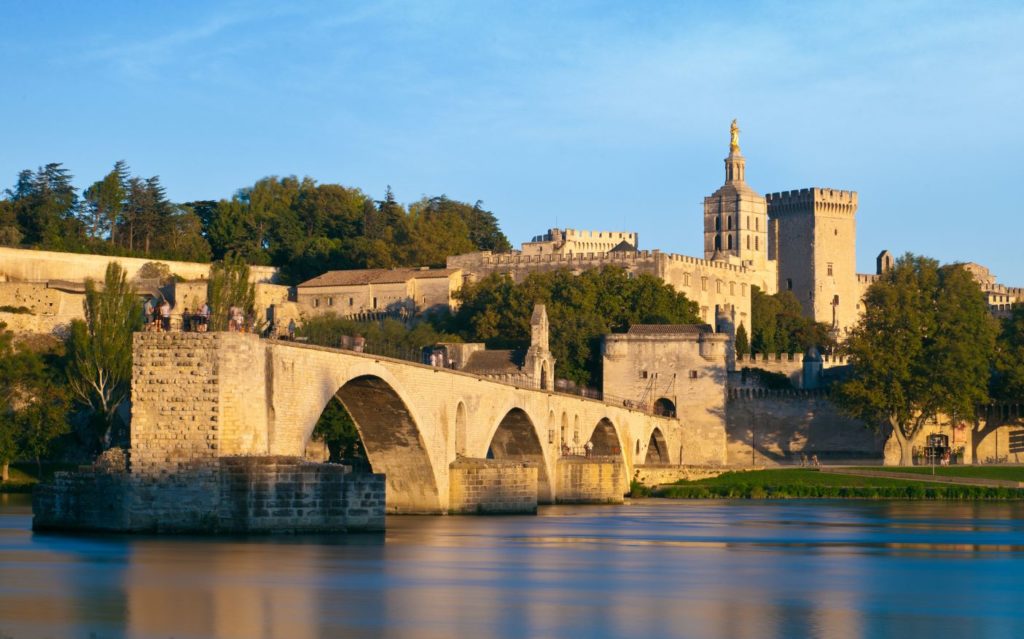
The most important bulding of the contat venaissin was Le Palais Des Papes in Avignon
The Palais des Papes (English: Palace of the Popes) is a historical palace located in Avignon, Southern France. It is one of the largest and most important medieval Gothic buildings in Europe. Once a fortress and palace, the papal residence was a seat of Western Christianity during the 14th century. Six papal conclaves were held in the Palais, leading to the elections of Benedict XII in 1334, Clement VI in 1342, Innocent VI in 1352, Urban V in 1362, Gregory XI in 1370 and Benedict XIII in 1394.
Since 1995, the Palais des Papes has been classified, along with the historic center of Avignon, as a UNESCOWorld Heritage Site, for its outstanding architecture and historical importance for the Papacy.
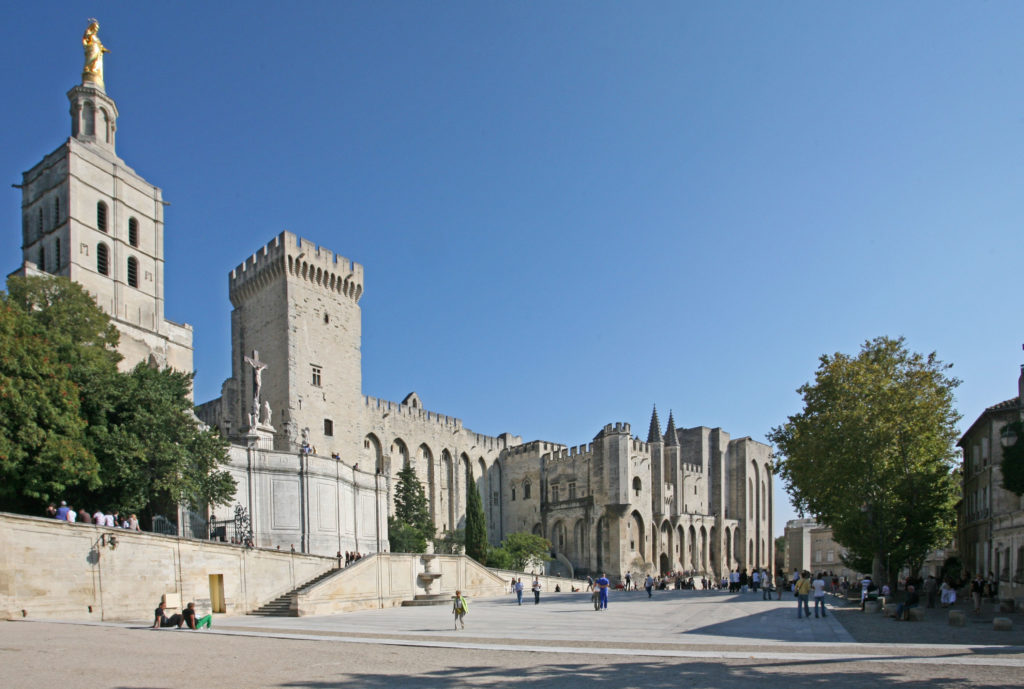
Article 1 Sofiene : Jews of the pope
During the 14th century, the popes resided in Avignon where the presence of the papal court favoured the activity of the Jews, despite an attempt to expel them.Indeed, in 1322, John XXII expelled the Jews from Avignon and the Comtat who took refuge in Dauphiné and Savoie. To complete the expulsion, the pope considered it useful to throw down the synagogues of Bédarrides, Bollène, Carpentras, le Thor, Malaucène, Monteux and Pernes. This expulsion was short-lived because the same pope, in 1326, during the Council of Avignon, imposed on Jewish boys from the age of fourteen to wear the yellow headdress and on girls, from the age of twelve, to wear a distinctive veil (cornalia or cornu).
During the period when the popes resided in Avignon, Jewish trade continued to flourish in Avignon. Jewish merchants supplied the papal court with food, cloth, horses, perfume, coral jewellery and beads for rosaries. Even Gregory XI’s tailor was a Jew. In 1374, 87 of the 94 cloth merchants in the city were Jewish. There were also some money lenders.
The communities of Avignon and Carpentras were dormant for a century and a half, but after 1962, with the arrival of Jews repatriated from Algeria, they found a new vigour. The Carpentras synagogue, rebuilt in the 18th century on 14th century foundations, is the oldest synagogue in France still in use today.
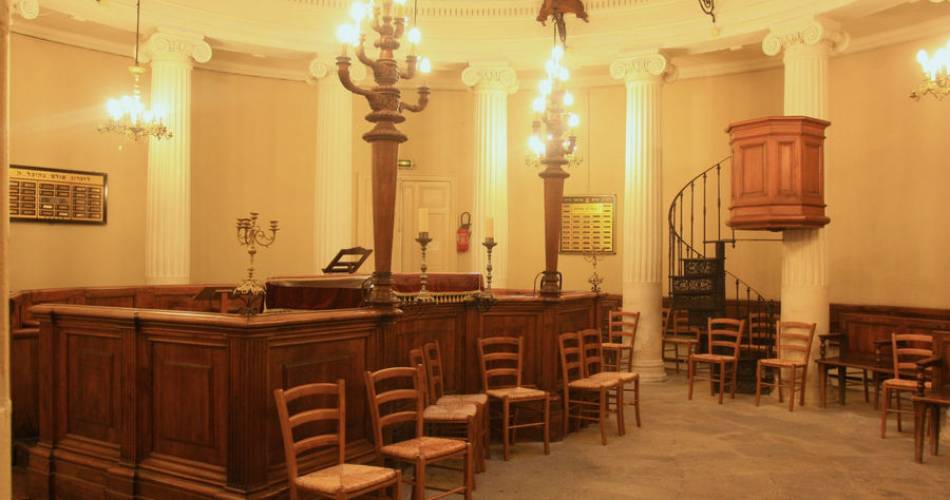
Article 2 Sofiene : Agriculture
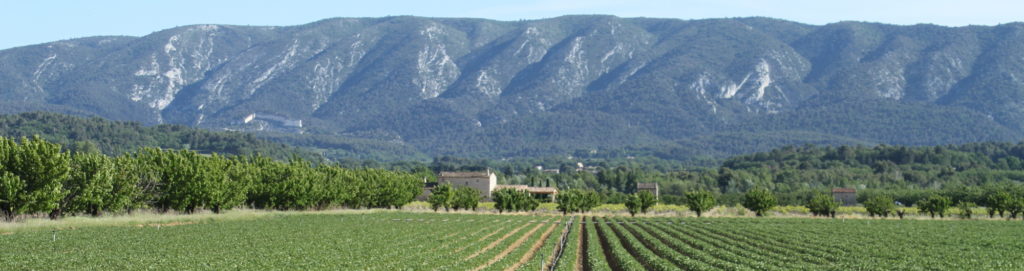
The arrival of the popes in the Comtat and then their installation in Avignon upset the eating habits. We have seen that the Comtadine plain became the papal granary. But the irrigated areas saw, from the 14th century onwards, the appearance of new varieties such as lettuce, artichokes and melons. The first industrial culture was established with the mulberry tree for silkworm food and the development of sericulture (silkworm breeding). Contrary to popular belief, the popes did not cover the Comtat with vineyards. Only the terraces were devoted exclusively to the cultivation of vines.
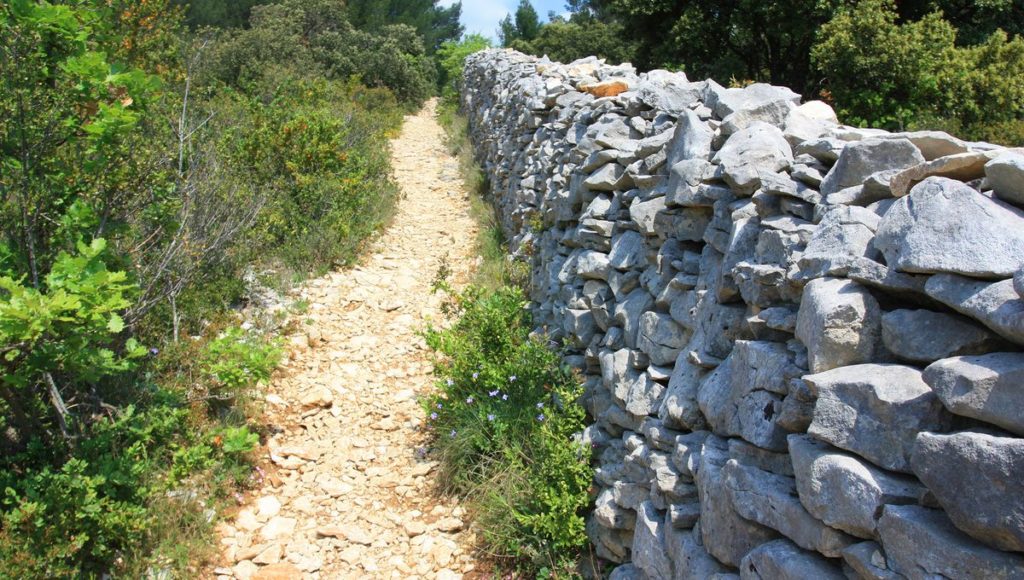
Article 3 : The plague wall
On the plateau of Vaucluse, a wall is a witness of the great plague of 1720 which killed more than a fifth of the population of the Comtat.
In 1720, the Grand Saint-Antoine, a ship from the Levant, brought the plague to Marseille. Very quickly, the epidemic spread in Provence and reached Apt. To prevent it from entering the Comtat Venaissin, the Pope’s vice-legate had a dry stone wall built from Monieux in the north to the Taillades sur la Durance.
At the beginning of 1723, when all danger of contagion was removed, the wall was abandoned.
This plague wall, called at the end of the epidemic “the line of the curse”, follows the crest of the Vaucluse mountains for 25 km. It starts at the Pas du Viguier south of the Nesque gorges and ends at the Baume farm south of Cabrière-d’Avignon.
It was built in dry stone using stones found on site. The assembly is coarse and irregular and very often wobbly. Left totally abandoned from 1723, there was only a shapeless heap of stones left when in 1986 enthusiasts began to survey it.
After 30 days of inventory, volunteer workcamps totalling 120 days of work (between 1986 and 1992) will ensure the restoration at both ends.
Since 1986, the “Pierre Sèche en Vaucluse” association has been surveying the “plague wall” and the accompanying installations, restoring parts accessible to walkers and opening a historical trail through the Monts de Vaucluse.
Comtat Venaissin’s tourism YACINE
Nature in Le Comtat Venaissin, Avignon
The Comtat Venaissin, is divided into several micro-countries: the principality of Orange, the plain of Carpentras, the country of Sorgues, the country of Cavaillon and the Avignonnais.
Rich in history, the ancient land of the Avignon popes is a huge vegetable garden where melons, strawberries, salads, muscats, asparagus and many others grow. The thousands of plots are interspersed with cypress hedges and reeds, which protect them from the mistral.
The terraced vineyards of the Comtat produce renowned wines benefiting from an AOC.
In the plain, we grow vines with prestigious AOC, including the famous Châteauneuf-du-pape…
Typically Provençal, the countryside unfolds its lavender fields scented against the backdrop of Mont Ventoux. Peeled and rocky, this one welcomes on its sides only a few firs, pines and cedars of Lebanon. Culminating at 1912 meters, its summit is white all winter long…
At its thyme feet, rosemary and green oaks rub Scots pines and pubescent oaks…
Culture in Le Comtat Venaissin, Avignon
The big cities of the country each have their own peculiarities…
Vaison-la-Romaine concentrates oppidum, Roman city and medieval village.
Orange, bordered by the Sainte-Europe hill, where the culture of the vine dominates, has preserved its superb Roman theatre which today hosts festivals.
Carpentras, the historic capital, evokes Tuscany and Umbria with its hills, cypresses and villages with pink tile roofs, hung on rocky peaks.
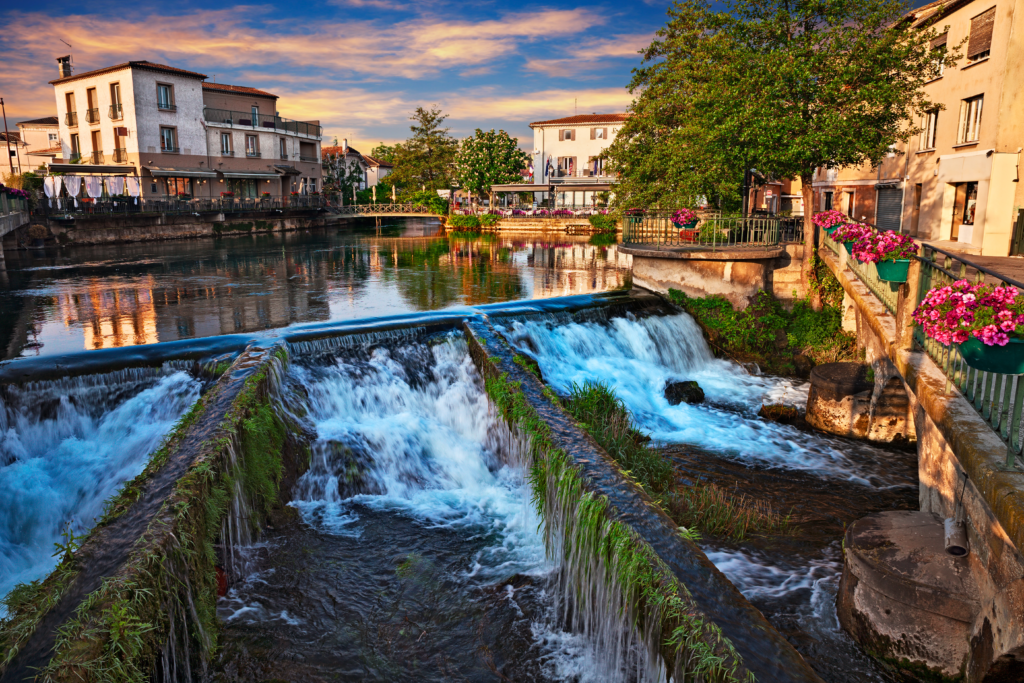
L’Isle-sur-la-sorgue, the «Venice of the Comtat» is a city of water with romantic banks the lined with plane trees and willows.
Cavaillon, capital of the Cavares country, produces thousands of melons and houses a superb synagogue…
Avignon, the queen of the Comtat, city of popes and city of the famous theatre festival, sits behind medieval ramparts of all beauty… Its famous bridge (the Saint-Bénezet bridge), its grandiose Popes Palace flanked by magnificent gardens, its private mansions, its towers, its paved squares and its picturesque alleys are a pure enchantment… Without counting the cultural effervescence that animates the city all year round…